Sign-Wavers in Hawaii

Maui Weather Today: high of 86, Low of 70

Sign-Wavers in Hawaii

Aloha!

The first time I saw the quaint practice of political sign-waving in Hawaii, I almost wrecked the car. I was tooling down Hana Highway ready to round the corner up to Haleakala Highway, and a group of nutty people were by the side of the road, waving signs, leaning in toward my car and generally making a nuisance of themselves to an unsuspecting driver. The next time I saw them was on the other side of the road in the morning on my way to work. Once I slowed enough to read the sign I thought this was perhaps a rogue political candidate who had come up with a way to make himself stand out in the crowd. But no, this is business as usual for politicians in Hawaii. You can view it on you tube at http://www.youtube.com/watch?v=CZRMHa1jQnk in relation to safety concerns raised. And I think it does slow traffic down.

Richard Borreca of the Honoulu Star-Advertiser said today:

“I have a theory about why we get the political leaders we get.

It is because of sign waving.

What is it that takes the normal, akamai, pleasant Hawaii citizen and turns him or her into the perennial lei-wearing, egomaniacal, self-promoting politician capable of raising your taxes, sewer fees and bus rates while cutting government services, shutting schools on Fridays and skulking around the state Capitol and City Hall?

It’s those hours out in the sun and traffic, I tell you.

First they have not the sense to stand back from the traffic. The sign wavers are right on the curb, the signs are out into the traffic and they are waving frantically.

Hawaii has a strict sign-waving protocol that all politicians must observe. Supporters assemble wearing their candidate’s T-shirt. The candidate wears a red carnation lei. There has been some deviation in recent years away from red carnations, but the pros stick with what works.A veteran legislative staffer admits she has been waving signs for candidates for 25 years — a quarter century baking in the sun, inhaling traffic fumes and still not hallucinating.”

Herbert A. Sample / Associated Press, said: “Unlike most of the country, it is against the law in Hawaii for politicians to plaster their faces, names and slogans on billboards or utility poles.

So the three major candidates…for congressional election here are taking to busy rush-hour intersections—or the sidewalks, actually—to become living ads by waving signs and hoping drivers notice the hoopla.”

It is a decades-old, low-cost tradition that has been replicated in few other places in the U.S., at least to the extent that Hawaii politicians do it.

“I’m not sure if sign waving actually causes anybody to vote for a particular candidate,” said Honolulu Councilman Charles Djou. “But I will tell you that people won’t vote for a candidate if they don’t sign-wave,” he added.

SignWave

Above: Senator Inouye waves a campaign sign with Colleen Hanabusa in Honolulu. (Photo: Crystal Kua)

Ed Case, in regard to his 2010 campaign, said that because he was out before dawn, voters could witness a measure of his commitment, character and hard work. “It’s not the be all and end all, obviously, of a campaign, but it’s an important part of it,” said Case while sign waving along an eastern Honolulu thoroughfare.

The practice has become a must-do for candidates, said Hanabusa. “I think that (voters) begin to expect it, and they are not surprised to see it,” she said while standing in front of her “Hanabusa for Hawaii” sign near a busy central Honolulu intersection.

Our French visitors who were just here found the practice odd and laughed about it. It does have a way of making the candidate look like something of a baffoon. But then after a while it kind of grows on you. Hawaii is always surprising in the way it’s unlike anywhere else in the country, and the elections are no exception.

Perhaps the most over-the-top sign waver was former state Sen. Steve Cobb, who would start sign-waving in the early morning darkness. To be seen, Cobb would wrap himself up in Christmas tree lights and plug himself into a portable generator.

Good thing I didn’t see that one first, or I might really have wrecked the car.

A hui hou (til next time). If you’d like to subscribe to this blog, please click the Follow button on the Home Page.

Aloha, Jamaica

Moving to Maui Advice

Maui Weather Today: High 86, Low 70

Moving to Maui Advice

Aloha!

Maui is an island paradise for most people who visit, and some decide to come  back–permanently. For many people, moving to Maui is a dream come true. But sometimes we need to look at our own situations through a different set of eyes.  Sometimes, we need to realize the great things that we might already have. For instance, are you close to your family? Can you really picture leaving them behind? I know a girl with two children, a husband and a business here in Maui, but she just can’t seem to leave her East Coast roots behind. She complains all year and then spends the summer “at home” as soon as the kids are out of school. Her husband is a bit adrift all summer while she’s gone, and misses his kids. But this is what she has to do to make Maui work for her.

Here are my suggestions for a move to Maui:

1) Line up a job. The job market is very tough everywhere, but even more so on Maui. It’s a very small island and the good jobs get handed down–someone who knows someone/is related to someone, etc. I would not move thinking you can get a job once you get here.

2) Save as much money as you can. Moving to Maui will cost several thousand dollars, and you will want to have at least a few month’s worth of living expenses saved up in case of  emergencies. Work overtime, cut expenses, do everything you can to save as much money as possible.

3) Take a trip to Maui, and drive around the island. Better yet, stay in all the areas you are considering moving to. Get a feel for the weather, etc. by talking to the locals. For instance, it rains in Haiku ALL the time. Is that really the weather you want in your own Paradise? Also take into consideration what activities fit your lifestyle. Are you a surfer, a windsurfer, or just a beach-goer? The beaches on the Kahului side of the island are windy most of the time, great for windsurfing, not fun at all if the sand is between your teeth as you try to lie in the sun.

4) Secure housing. Check craigslist.com. The rental market is very tight right now because so many people have lost their houses. It can take a while to beat out all the others wanting to rent in the same area you are looking at. Be patient and realize the timeline might be longer than you’d like for both a job and housing.

5) Once you have both a job and a housing lined up, decide which items you want to move. One friend called this “making the cut” as in “That book didn’t make the cut when I moved.” It’s much easier to find things on Maui than it used to be, however one of the hardest items is a sofa. The furniture stores don’t like to pay to ship furniture to Maui that may not sell, so when you go into a furniture showroom (Latitudes http://www.latitudesinhawaii.com/) in Kahului, Home World in Kahului (formerly BJ’s,it  just got bought out) or Moore’s Interiors in Lahaina  http://www.mooreinteriorsmaui.com/index.htm , etc.,realize that all the sofas you are seeing could have a five-month wait once you order them. So if you have no patience or really, really, love your sofa, consider bringing it with you. Otherwise there are always garage sales, or Costco!

A word about sofas: As a designer, I alway found sofas a dichotomy on Maui. I covered my sofas up with slipcovers, thinking this was the best way to handle the red dirt. The other day I removed the slipcovers to wash them, and there is mold under the sofa cushions from being covered up in a humid climate! Another option is leather, which never makes sense to me in a hot climate, because your bare skin sticks to them. But… you can wash the mold off. So, maybe a leather sofa with some type of slipcover or even a sheet thrown over it when you are relaxing….and then rattan sofas tend to be hard as rocks and not cushy or comfortable to lean against.

If I had it to do over I would probably buy a daybed from someplace like Bali (called a puune, poo-nay, in Hawaiian) with one large mattress that could be replaced, and a ton of pillows to lean against.From the website  http://www.discoveringhawaii.com/Living_Hawaiian_Style: “The Hawaiian pune`e is essentially a daybed, traditional in Hawaii Living since
the time of ali`i. Usually the size of a full bed mattress, it is placed in the
living space rather than the bedroom, as it is meant for lounging alone or with
company. Visit James T. Ferla’s delectable website to view his hand-crafted Hawaiian furniture. He also lists two books that I am very familiar with and can endorse:

Under The Hula Moon, by Jocelyn Fujii is a priceless and endless source of inspiration, as most of the photos in this beautiful book are of local houses of every style, from surfers’ crash pads to Plantation Boss Mansions.

Hawaii, A Sense Of Place by Mary Philpotts McGrath features the gorgeous homes of the rich and famous, but even if you’re poor, you’ll find a lot on island decorating ideas here.

So when you’re finally ready to buy that one-way ticket to Maui, ideas abound!

Thought for the day:The world is full of cactus, but you don’t have to sit on it.

A hui hou (til later). If you’d like to subscribe to this blog, please click the Follow button on the Home Page.

Aloha, Jamaica

Affordable Housing in Maui

Maui Weather Today…More of the same.

Affordable Housing in Maui

Aloha!

People write to ask me about living in Maui, and how to afford it. One of the ways that many locals make it work is to build an Ohana. “Ohana” means family in Hawaiian, but in this case refers to a living space, technically attached to the main house. Like an in-law unit.

When we built our house we added an attached ohana. It’s one-bedroom with a nice sized covered lanai, and it shares one wall with our part of the house, which makes the main house more like a duplex. This is a smart move in Hawaii, as many people can’t afford to buy, so it’s a win-win for everybody.

Until it’s not. We got spoiled with our very first tenant, a woman with a big Labrador. She also loved our cat, Lili, and was in fact a vet tech.  “Auntie Amy” as we called her, was heaven sent: she was quiet, clean, and loved to take care of Lili if we had to leave the island (and even took it upon herself to vacuum the house because Lili has allergies to dust and red dirt). I am not making this up. Auntie Amy was with us for five years. I kinda hoped she’d stay till she was eighty.

But then Auntie Amy got cancer and was down for about a year. Then it came back, and she decided she had to move. That’s when we found out about Crazy Tenants.

Crazy Tenants are people who look good on paper but in fact will make you question your own sanity for renting to them.There was Bernard, the old Japanese carpenter who was from Oahu and wanted a temporary place to live while he built a house on Maui. He signed the lease and the next thing we knew he had covered up all the windows with brown paper grocery bags and the place was emitting a very strange odor, like fish left out for two weeks. Then Mike came around the corner and found Bernard changing the locks. A no-no, and against the lease (how can a landlord get in if there’s a fire or a dead person in there?) He muttered something and Mike realized he was paranoid and possibly schizophrenic. His daughter threatened to sue us because there was a spot in the sidewalk that was raised a quarter of an inch and he might trip on it. Bernard moved out.

Then there was the Maui fireman (Mike was a fireman, so we figured this was a sure bet) who lived in the unit for almost six weeks. Then, when the yearly influx of German cockroaches began (it was a  particularly bad year) he accused us of hiding them from him. Um…so we were like keeping them in a cardboard box and only released them once he’d lived there six weeks? Another one moved out.

Then there was Crazy Katie. She promptly moved a boyfriend in (breaking the lease) and then got a cat without permission. We are animal people…we just told her she’d need a pet addendum to the lease. She refused. She started sending strange emails and quoting landlord/tenant code to us. About the time it appeared she was going to spin out, she moved. We breathed a sigh of relief.

After that came a girl who shall remain nameless because she was so scary. I thought I was going to spin out with that one. And each time we said, “We sure miss Auntie Amy.” And we surely did.

These people all appeared normal and looked great on paper. Appearances are deceiving.

This last go-round, we gave up on Maui people and imported a couple from Alaska. Mike teases that he had to import me from California…so we figured it could work with tenants, too. They are a joy. They are quiet and polite and we are happy. They tell us they are happy too.

Affordable housing in Maui? An ohana really only makes your mortgage more affordable if you aren’t putting up with Crazy Tenants.

A hui hou (til next time). If you’d like to subscribe to this blog, please click the Follow button on the Home Page.

Aloha, Jamaica
Where you stay?

Maui Weather today: don’t care what they say…it’s windy, chilly and looks like RAIN Upcountry! A very unusual summer.

Where you stay?

Aloha!

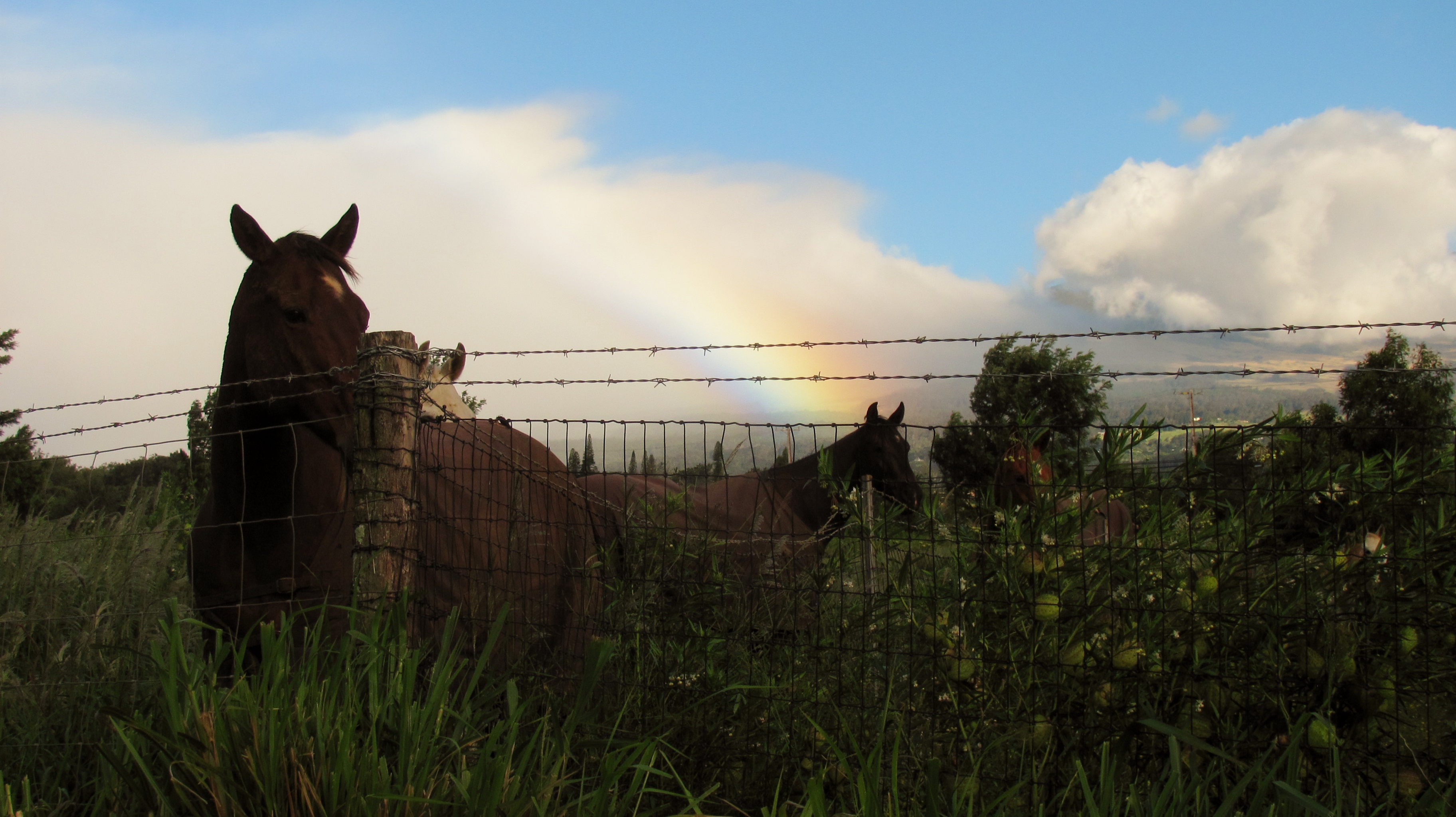
In pidgin, “Where you stay?” means where are you…or where do you live? We got invited to a friends’ house for dinner Sunday night. They live near Makawao, and I started thinking about why people live where they do on Maui, and on the way I snapped these horses:

Makawao Horses

And then the rainbow behind them got brighter:

Maui Horses

When I moved to Maui I had only been Upcountry once, on vacation. “Upcountry” refers to the area at the base of Haleakala mountain and includes the communities of Kula, Pukalani, Olinda, Makawao and Haiku, plus surrounding areas. When I vacationed here, someone told me it was where the “normal” people lived (whatever normal is!) meaning full-time Maui residents who wanted to buy a house and not live in a condo. Other than that, I had no idea that there were cowboys and horses and ranches and a Polo Club http://www.mauipoloclub.com/. up here. We went one Sunday to watch Polo and it was a lot of fun.

Makes sense that the country music station is out of Makawao. You see cowboys and cowgirls in boots and Western wear here in this cowpoke town. I thought for a brief moment that it might be fun to own a horse until my friend Jody, who had a horse, clued me in on what it costs to keep one fed on Maui. Nev-er mind. People who live Upcountry are different from those who live in say, Lahaina, and usually the twain shall never meet. Friends we knew from when we lived on the Westside have never been to our home Upcountry, including the formal invite to our Hawaiian house-blessing that we had with a Kumu presiding, complete with maile lei. The general attitude seems to be “We live in Lahaina, we don’t GO Upcountry.” (We don’t need no stinkin’ Upcountry!)

I did an informal poll at the dinner gathering Sunday night. Why do you live where you live on Maui? Our group included a guy who lives in Kihei to be near his job, but is from Madison, WI. (Shout out to my sister Marcia and her husband Richard in Madison!) He said when you’re from the Midwest, the pull to Maui is agricultural. That a Japanese farmer in Maui is no different from a strapping German farmer in Wisconsin. As I toured my friend Wendy’s property that evening I was struck again by how much Makawao looks like Indiana, where I was a kid. Horses and cows and fields. Rapsberry bushes running wild along Wendy’s fence row, just like in Michigan, where she grew up. They say you can never go home again…but do you think we try to recreate what we had as children? It that really why I live Upcountry?

What about you…if you moved to Maui, where would you choose to live and why? The real question is: how would you design your life? Many who live on Maui wish they had a place at the beach for in the winter and a place Upcountry for in the summer when it’s hot. In our dreams!

I saw a funny Facebook post the other day. Someone was vacationing on Maui and said, “I didn’t know until this trip that there was any hiking at all on Maui! I was always all about, ‘Why would anyone ever leave the beach?'”

Exactly. The reasons are as many and varied as the people. The carpenter from Kula who helped us build our house, in referring to Lahaina said, “That’s Disneyland down there.”  Another friend who’d lived in Lahaina but moved Upcountry said that she “grew weary of the transience: everyone’s just there for a year or two…there’s no real sense of community”. And yet the Lahaina people can’t understand why Upcountry people would ever live away from the ocean. For Mike and me, it was a matter of 1) being better able to afford a house, 2) cooler weather (he napped all the time when we lived down there, it was SO hot, he never naps Upcountry and 3) we eventually got our fill of the crowds. Especially Mike. I thought maybe a vein was going to pop in his head or something…

Example: you go to Safeway in Lahaina and the tourists, who have no idea where anything is, have their carts parked sideways, blocking the aisles. And they drive sooo slowly. Looking at the scenery, or more likely, lost.  And clueless that we need to be somewhere, like now. I totally understand this, because as a tourist in Napa Valley a couple of years ago, I nonchalantly headed out from my hotel onto the old two-lane highway for breakfast one morning, and when I glanced in my rearview mirror, a local girl was making a rude gesture and pounding her fist on her watch. Then she sped around me. Stupid tourist, indeed. Yes, they have jobs and time schedules, but don’t they know I’m on vacation?

On Maui, do tourists realize we have jobs, doctor’s appts and dentist appts. to get to, kids to pick up from school…just like they do back at home? Vacation is a bubble people live in for a brief moment that they wish could last and last…so they stretch it out. Slowwwllly.

I find it one of the most interesting phenomenoms that people stake out their little corner of Maui and don’t leave it. You tell yourself you won’t do that when you move here…but somehow it happens. Maybe it’s the winding road into Lahaina that keeps people from going over there. And then you certainly don’t want to drink at a restaurant and then drive that road back home. Or maybe it’s that people work over there and don’t want to drive back over for entertainment? But how does that explain that Lahaina people who don’t want to leave there? Seriously.

Here’s my parting story: when I began my women’s group on Maui, the group of women met for the first time. The idea was to rotate houses for the meetings. There was one girl, April, who lived in Kihei. The rest of us were Upcountry folk. When Karen heard that April was from Kihei she said heatedly, “I am NOT driving to Kihei.” This, my friends, is is a thirty-minute drive, and no one wants to do it. Don’t ask me why, I can’t explain it. I lived in the corn fields of Indiana where we drove thirty minutes for a gallon of milk.

They say there are beach people and mountain people. Maybe it’s as simple as that.

Where you stay?

A hui hou (til next time). If you’d like to subscribe to this blog, please click the Follow button on the Home Page.

Aloha, Jamaica

The Road not Taken

Maui Weather Today: High of 85. Low of 72.

The Road Not Taken…in Maui

Aloha!

My niece Alyssa just graduated from high school. This is what I will tell her:

When you move to Maui, it’s a pretty sure bet that you are not one to follow the crowd. This sounds counter-intuitive, I know, since the crowd thinks it wants to live here. But to actually leave your home, your family, and move to Maui is something entirely different. Now you’re walking the walk, not just talking the talk. I sorta envy those who grew up here..they have such close family ties. I miss my family and thought they would visit much more often than they do.  But it’s a different world now, it’s expensive to fly, it’s expensive just to get by.

All I knew was that I wanted to live somewhere warm. I was sick of being cold my whole childhood and I was determined to do whatever it took to leave the Chicago area. First I moved to California. Then to Hawaii. Everyone wants to know: how can you afford to live there? How can you own a house? They write to me and ask me that.  I once saw an interview with Michael J. Fox where he talked about the concept of “selling your twenties to buy your thirties”. While my friends were grooving at concerts, going on cruises and living the good life in their twenties, I was saving money, then building a house and delaying gratification.

It’s about choices.

I have a friend who built a house and also bought a bookstore in Mexico. People ask her, too, how did you afford to do this? Her answer: sacrifice. She and her husband lived in the Bay area, worked very hard, and saved every penny they could. They chose not to have children. They bought the land, then built the house with cash, little by little, making trips to Mexico to do the work themselves.  Choices.

Today the choices are even less clear: technology whispers from every corner “buy me, buy me”. Eric Gilliom http://ericgilliom.com/and Willi K http://www.barefootnatives.com/ from Maui did a song about Maui where they talk about not owning a cell phone and driving a Maui cruiser (junk) car. The Road Not Taken is often a beater car covered with red dirt in Maui. It’s often a cinder-block house with jalousie windows. It’s often a bunch of roomates.

My Kenmore dishwasher is 33 years old. I am not making this up. It came with the house we tore down to build this one. It looks like someone tied it to the bumper of a car and dragged it behind.  The racks inside are broken and rusting. It’s quite noisy. But is still works. So we are not rushing out to replace it to the tune of $700-$1,000. Every single thing on Maui is expensive.

I was in Foodland in Pukalani yesterday and they have hit a new personal best of $6.49 for a loaf of rye bread. I will soon not be buying bread! Also, our coconut tree in the front yard was dying, so we had to have it removed. The Samoan guy wanted $200. but Mike talked him down to $150. plus all the tangerines he wanted off our tree. The Ironwood tree is enormous and was threatening our roof. It was going to be a King’s ransom to get it trimmed, so Mike shaped a surfboard, had it glassed, and traded the tree trimmer for the board. (A Mike Turkington surfboard is a coveted item: www.amazon.com/The-Curt-Mastalka-Collection…/B002M4NM0M  or https://www.google.com/search?q=mike+turkington+surfer&hl=en&prmd). Every day now it seems we say “There is more going out than coming in.” I know it is the same across the country…but what is the cost of living where you live?

Between the cost of gas, and food (bread!) and electricity on Maui, I don’t know how people with three children are keeping up. A commentary by Lisa Darcy in the Maui Weekly http://mauiweekly.com/ Executive Director of the Ho’omoana Foundation, talked about how she is “witnessing more people in need who are doing everything right and still unable to meet their basic needs or their family’s basic needs” because so many agencies have had to make cutbacks. Lisa ended with these words: “As long as I have (dental) floss, I am in a socioecnomic bracket well ahead of most of the world. This is not something I take for granted, nor that fact that I have a warm, safe place to sleep tonight.”

Moving to Maui is The Road Not Taken. It’s well and good to tell yourself the beaches and warm weather will make up for not having “things.” It’s another to be able to afford bread and to be able to put gas in your car.

A hui hou (Til next time). If you’d like to subscribe to this blog, please click the Follow button on the Home Page.

Aloha, Jamaica

Just Another Day in Paradise

Just another day in Paradise…

Aloha!

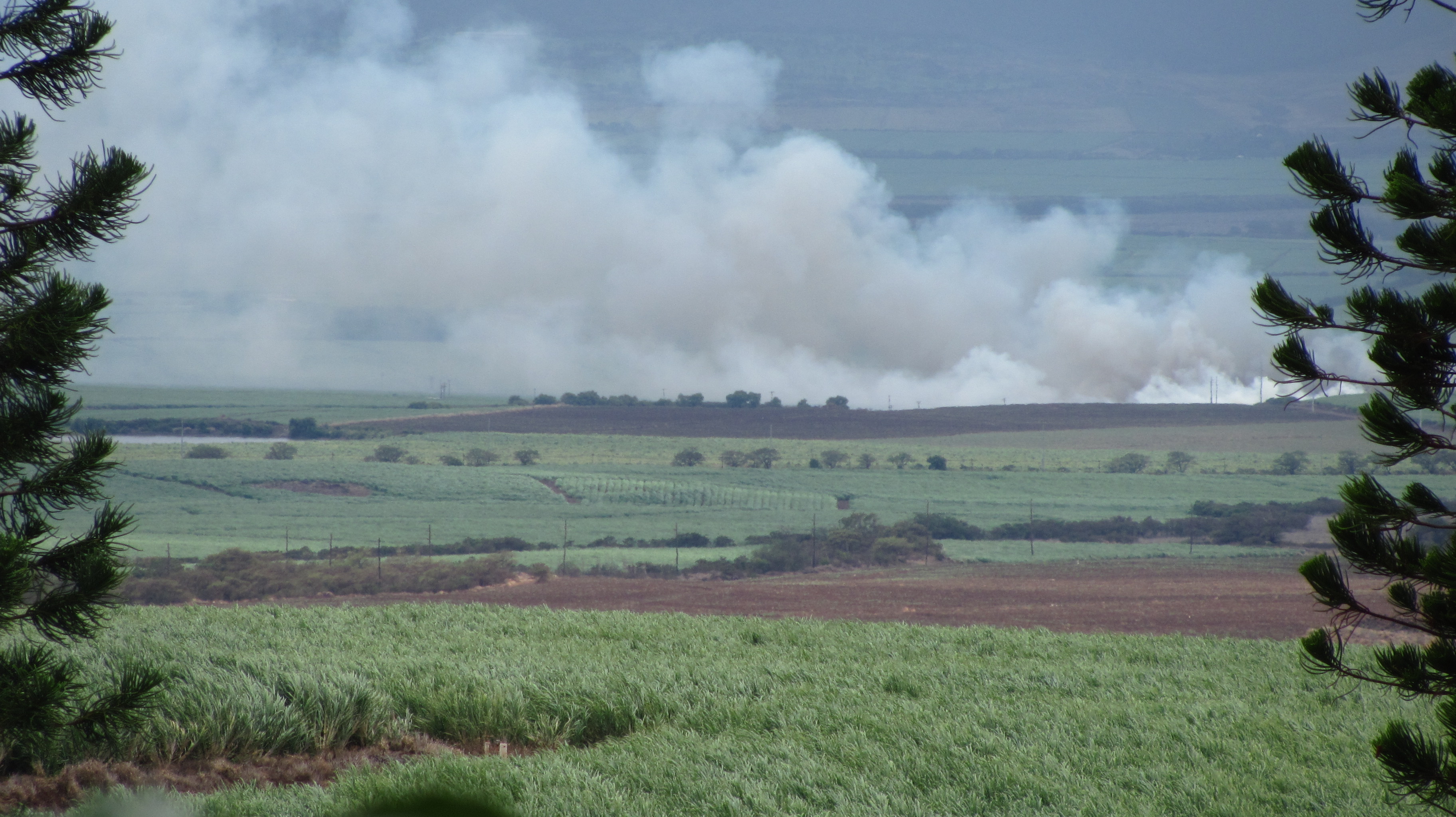
I woke this morning to sunshine, as almost every morning. I LOVE that, it’s one of the main reasons I moved to Maui. It’s like I just jones for sunshine. It makes everyone feel better, don’t you think? Shortly after I got up, they began burning sugar cane. We look out across the fields from our back porch:

and then it grew:

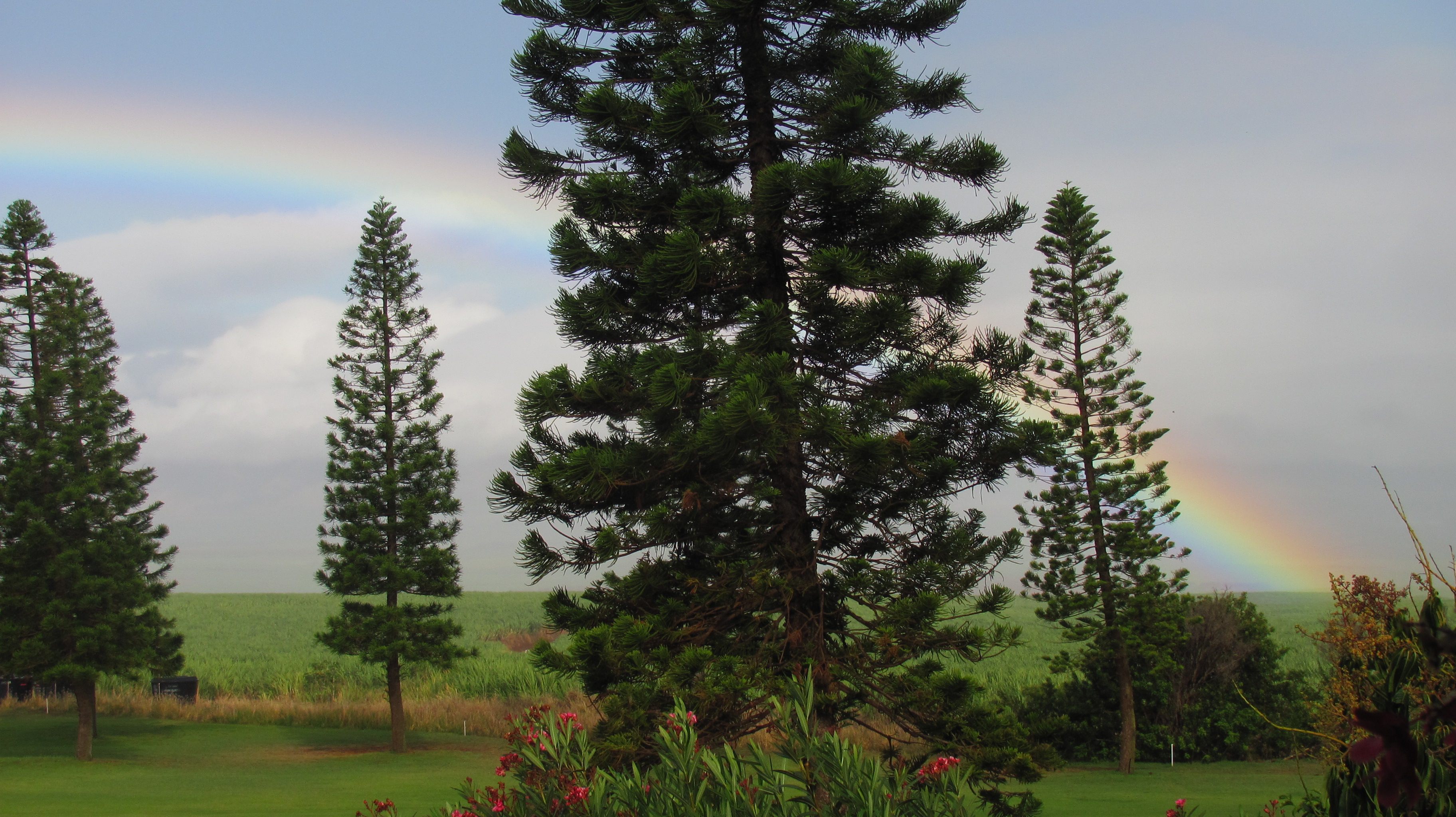
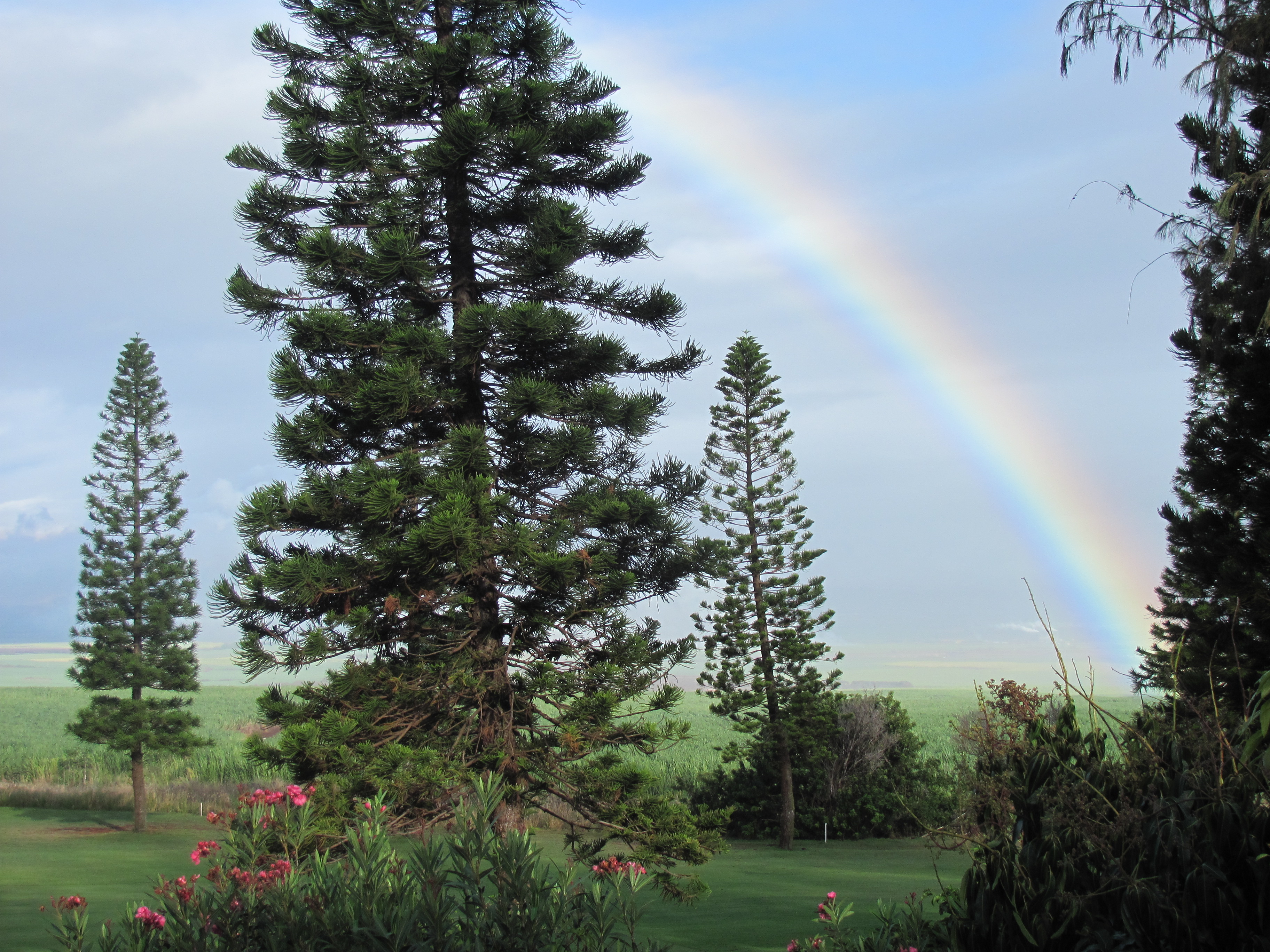
Let’s not forget that they burn the PVC irrigation pipe as well…all those toxins released into our Maui air. Then it started raining, at the same time that the sun was out. And I was treated to a rainbow:

Which kept metamorphasizing, and then the sky grew brighter:

And it stopped raining.

I came inside, washed my hands and when I picked up the hand towel in the bathroom, under it was a baby centipede. No matter what people say about the babies of all creatures being cute, that does not apply to baby centipedes. They just looked ticked off and like they can’t wait to find someone to sting.

All this within a 60-minute time period.  When you live on Maui, who needs television? Just another day in Paradise.

Question: When you’ve been to Maui, have you ever seen the burning sugar cane? What was your understanding of it?

And…what was the best rainbow you ever saw, and where?

Thought for the day: “The greatest part of our happiness depends on our dispositions, not our circumstances.” — Martha Washington

A hui hou (til next time.) If you’d like to subscribe to this blog, please click the Follow button on the Home Page.

Thanks for stopping by!

Aloha, Jamaica

Centipedes and Cockroaches and Rats, oh my!

Aloha!

So a group of us Maui ladies got together last night at a little restaurant to catch up on each other’s lives. What I’d like to ask you is this: Is it normal for a group of adult women to sit around and compare notes about how big the centipede was that we found in our kitchen?  Or under the bath mat?  To compare the color, the length, the width? I can’t be sure, but women in other parts of the country (especially the contingent that made the movie “Bridesmaids” a smash hit ) probably discuss other things at length. But there we were, like a bunch of guys after a day of fishing, where the fish just gets bigger as the discussion goes on.

But I held the trump card.

“Any of you ladies ever opened up your gas grill on your lanai and had a rat running around in there?” I asked. “Because that’s what happened to me Sunday evening.”  Lots of gasps followed. I’m not talking a mouse. It was a rat, with a nice long tail, and he wasn’t Ratatouille.  And I’m not ashamed to admit that while watching that stunned rat careen around on top of the grate that was supposed to then hold my steak, my appetite went right with him as he plunged off the grill and over the side of the porch rail. That sucker could move.

My friend Wendy spoke up: “I knew when I moved to Maui that I’d have to make peace with the bugs. I mean, really make peace with them. But a rat in the grill? No way.”

These things didn’t happen on the mainland.

I remember the first night I stayed in my new Maui rental, shared with two other roommates, who happened to be at work.  A green creature went running up the side of the bedroom wall and across the ceiling. I screeched.  It then made a weird chirping sound, and I was convinced it was a battle cry. I didn’t sleep that night, afraid it would run across the bed, afraid it would bite. I had no idea what it was. The next morning I described it in detail to my roommate, and insisted that he catch it and remove it from the house. He laughed so hard his eyes watered.  “That was a gecko.  They’re supposed to be good luck. Someday you’ll laugh about this.”

I didn’t believe him, but of course I did eventually laugh about it, kind of in the same spirit that Crocodile Dundee pulled out his knife and said, “That’s not a knife, THIS is a knife.” Because the gecko was nothing compared to all the other creatures I was going to have to learn to live with. I even went on to have a Jackson chameleon as a pet, and a Jackson is really just a bigger gecko with horns, which turns blue when it’s mad.

For now, just after the rat incident, I’m going to go have a nice green salad and think about how long I can go without grilling a piece of meat.

A hui hou! (til next time). If you’d like to subscribe to this blog, please click the “Follow” button to the right.

Aloha, Jamaica

Copyright Jamaica Michaels, 2012. All rights reserved. May not be reblogged or reprinted without  written permission of the author.